What makes Hokuriku wheat flour different for bread baking
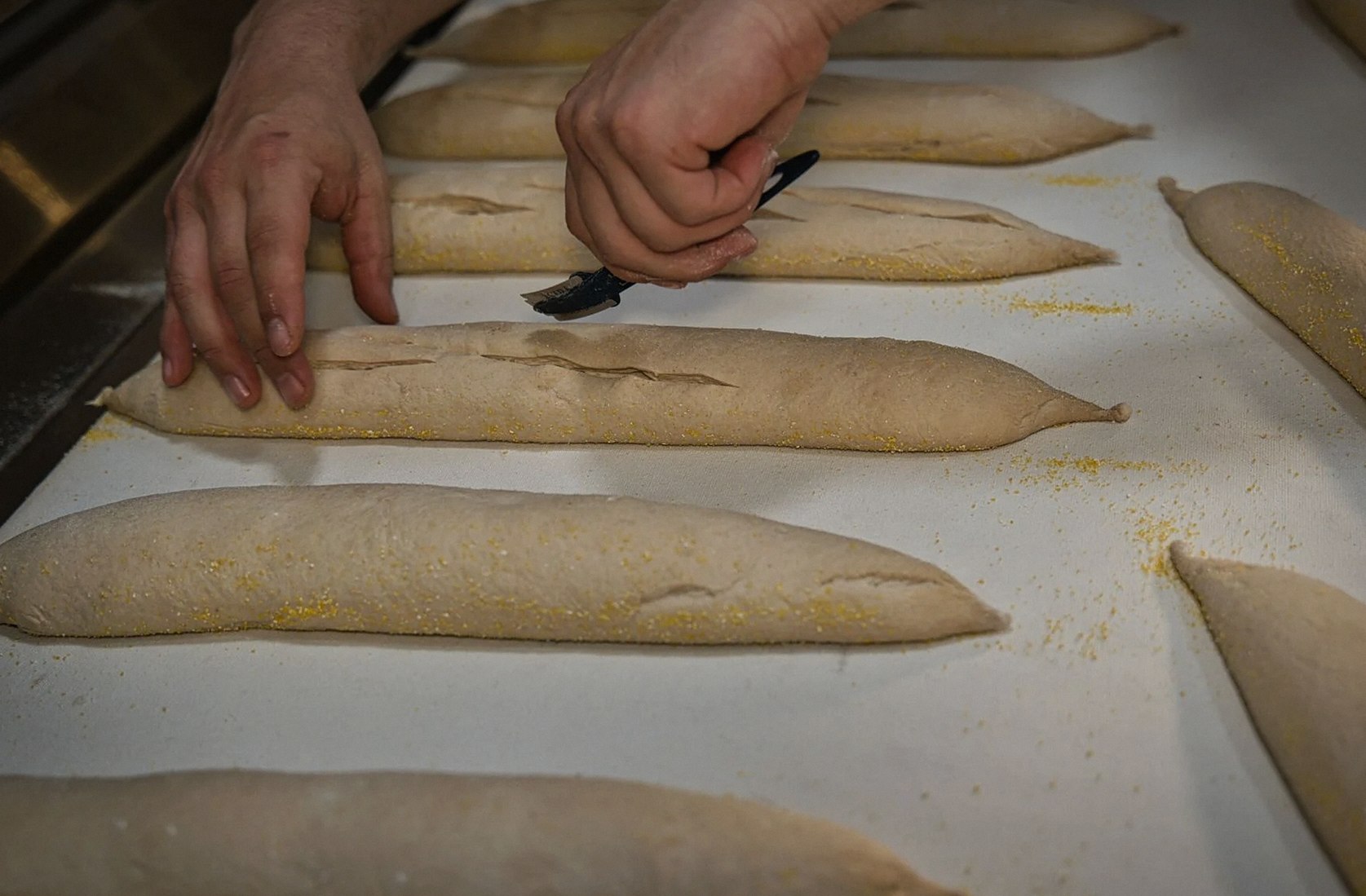
Most bread flour sold in Japan is blended from imported wheat, primarily from Canada or the United States, with a protein content standardised for consistent performance. That consistency is useful for commercial baking. For artisan sourdough, it can also be a limitation. We switched to a Toyama Prefecture mill's flour in 2020, and the difference in our crumb structure was noticeable within the first week.
Protein content and what it means for crumb
Hokuriku wheat tends to have a slightly lower protein content than North American bread wheat. Typically around 11 to 12 percent versus 13 to 14 percent for Canadian hard red spring wheat. Lower protein means less gluten development, which sounds like a disadvantage but produces a more extensible dough that is easier to shape and gives a more open, irregular crumb structure.
The trade-off is that the dough requires more careful handling. It is less forgiving of overworking and more sensitive to fermentation timing. We adjusted our mixing time and reduced our stretch-and-fold sessions from four to three when we switched flours.
Flavour differences
Domestic Japanese wheat has a milder, slightly sweeter flavour than North American wheat. In a sourdough loaf where the starter contributes significant acidity, this sweetness provides a counterpoint that we find more interesting than the more neutral flavour of imported flour. The country miche in particular benefits from this balance. The crust caramelises a little more readily, and the crumb has a faint nuttiness that was not there with the previous flour.
Practical notes for home bakers
If you are baking at home in Japan and want to try domestic wheat flour, look for products labelled 国産小麦 (kokusan komugi) at specialty food shops or online. Protein content varies by brand and harvest year, so it is worth checking the label. Expect to adjust your hydration slightly. Domestic flours often absorb water differently from imported blends, and a dough that works at 75% hydration with imported flour may need 70 to 72% with a domestic variety.
Start with a small test batch before committing to a full recipe change. The flavour difference is worth the adjustment period.
Regional flour is one of those variables that takes time to understand. We are still learning how the Toyama flour behaves across different seasons, and the harvest year makes a difference too.