How we make focaccia from sourdough, not commercial yeast
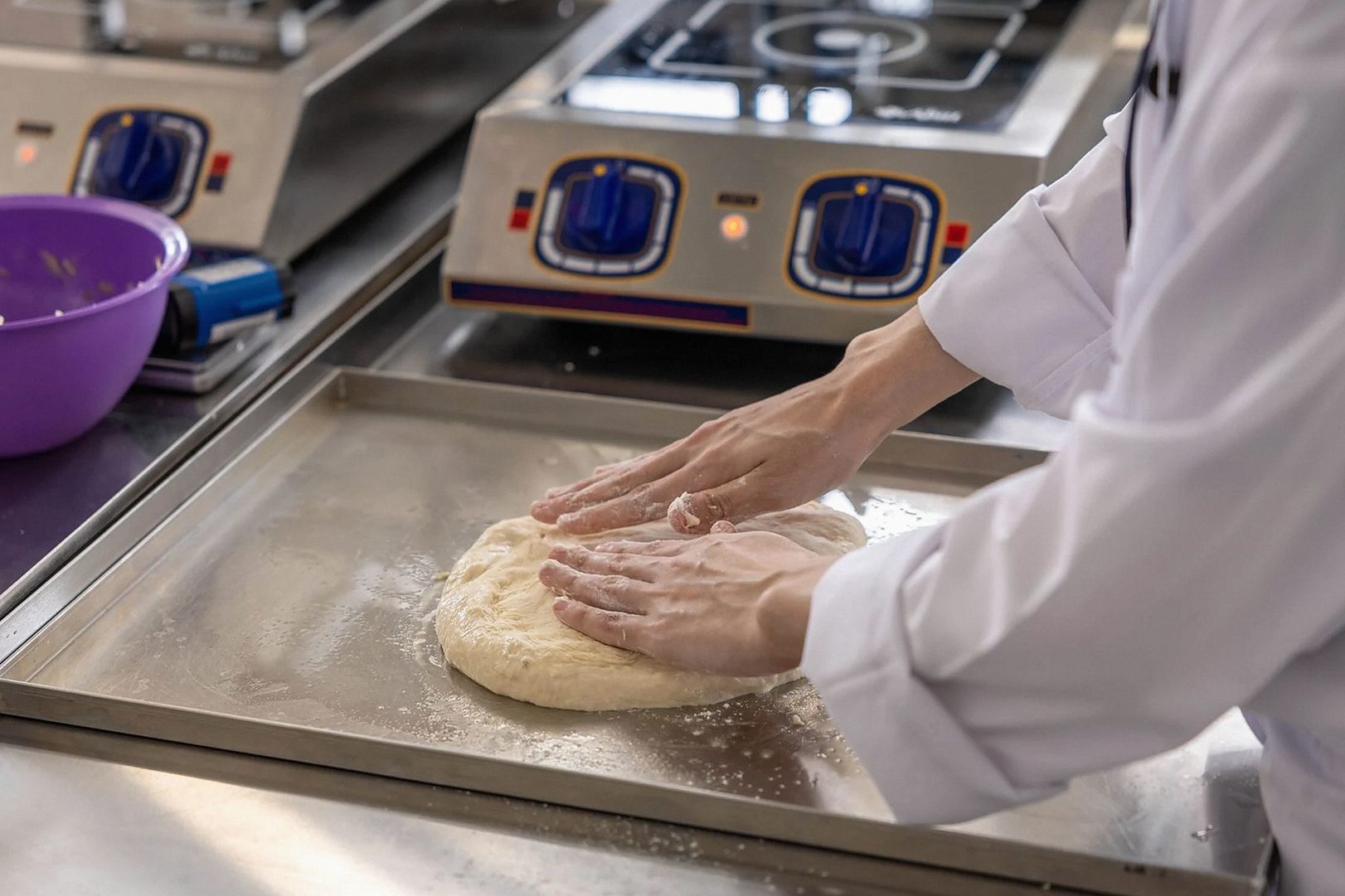
Focaccia made with commercial yeast is fine. It is soft, it is oily, it is ready in a few hours. Focaccia made with a sourdough starter is something different: the crumb is more open, the crust has a slight chew, and the flavour has a background complexity that commercial yeast cannot produce. We bake it on Fridays and Saturdays only, because the dough needs the same 18-hour cold ferment as our country miche, and we cannot fit it into the weekday bake schedule.
Starting with the miche dough
Our focaccia uses the same base dough as the country miche: 80% Hokuriku wheat flour, 20% whole rye, water, salt, and our starter. The hydration is slightly higher for the focaccia. Around 82% versus 78% for the miche. Because the extra water helps the dough spread into the tray and creates the large, irregular bubbles in the crumb.
After mixing and bulk fermentation at room temperature, the dough goes into an oiled tray and into the refrigerator overnight. The next morning, we take it out, let it warm slightly, dimple it with our fingers, add the toppings, and bake it in the deck oven at high heat.
Toppings and the seasonal approach
The topping changes every week. In summer, we used roasted tomato and shiso from the garden behind the bakery. In autumn, we are moving toward combinations like caramelised onion with walnuts, or roasted kabocha with a little miso. In winter, we tend toward simpler toppings. Rosemary and flaky salt, or just good olive oil and sea salt. Because the bread itself is the point.
We decide on the topping on Thursday evening based on what is available and what looks good. We post it on the chalkboard outside the shop on Friday morning. If you want to know in advance, you can call us on Thursday afternoon.
Baking temperature and timing
Focaccia bakes at a higher temperature than our loaves. Around 240 degrees Celsius in the deck oven, compared to 220 for the miche. The higher heat sets the crust quickly and creates the characteristic crisp bottom that distinguishes good focaccia from a flat, soft slab. We bake for 22 to 25 minutes, rotating the tray once at the halfway point.
At home, a heavy baking tray or a cast-iron pan preheated in the oven will give you a better bottom crust than a cold tray. The preheating step is worth the extra time.
Focaccia is available on Fridays and Saturdays only. It sells out quickly on Saturday mornings, so Friday is often the more reliable day to find it.